IV LEGION

World Narrative

The Sundering

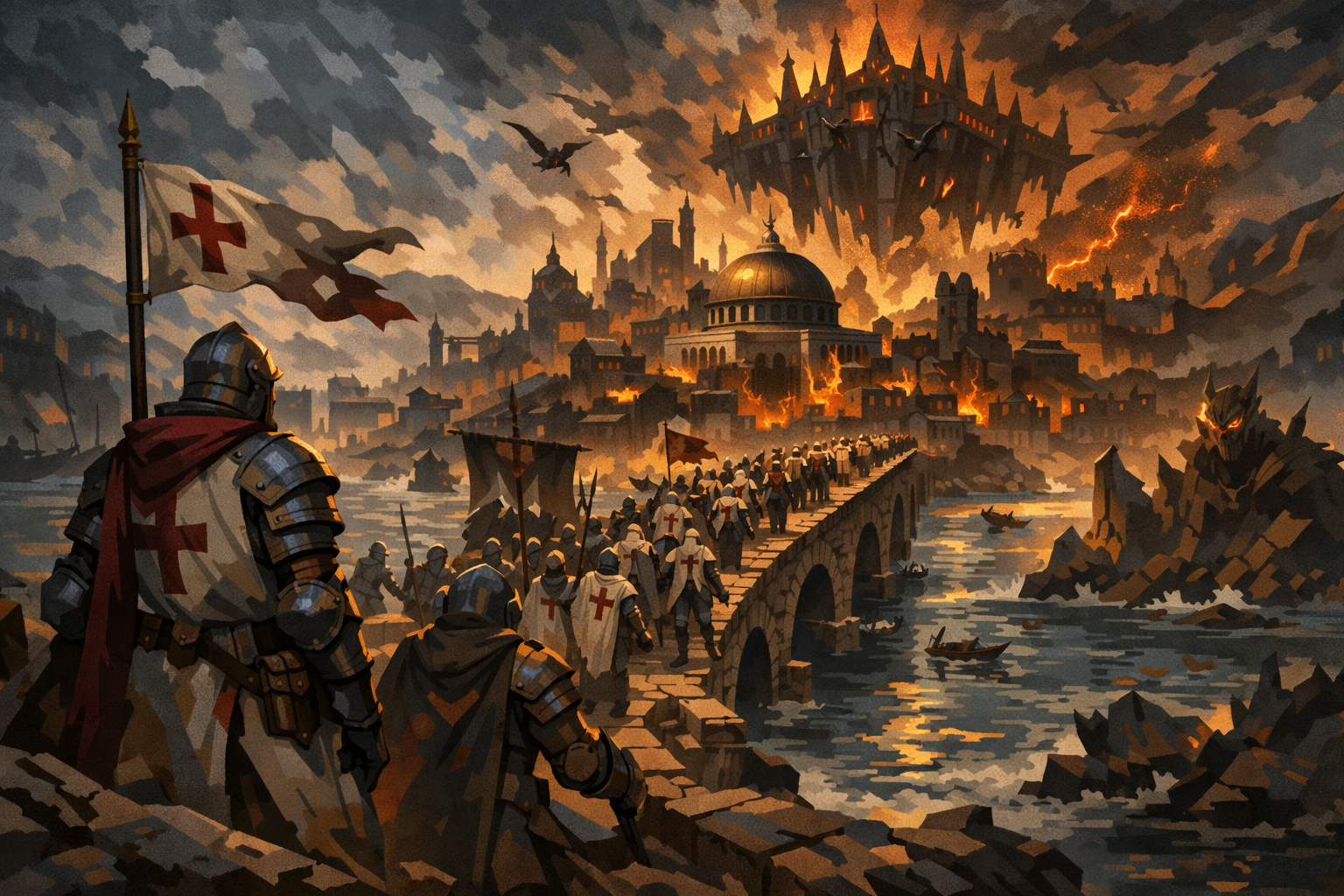
From Clermont to Jerusalem stretches a brutal armed pilgrimage, where the cities of the east are held by demons, corpse-eaters, and hell-forged kings.

Clermont. Constantinople. Antioch. Jerusalem.

When the West Took the Cross

In the west, the call did not go out as a king's command, but as a penitential vow. Lords, knights, footmen, priests, and camp followers took the cross and swore to march east in answer to a desperate plea from the emperor at Constantinople. Their charge is plain: relieve the Christian east, reopen the road to pilgrimage, and fight their way toward Jerusalem.

Beyond the sea, darker powers hold the road. Abyssal courts rule from cracked fortresses. Jackal-headed captains scour the plains. Furnace giants drag iron through the dust, and carrion saints rise from the grave to preach to the dead. The road still crosses the Bosporus, grinds through Anatolia, starves before Antioch, and ends beneath the walls of the Holy City. Every mile is haunted by the thought that hell reached those gates before the pilgrims did.
Clermont Constantinople Antioch Jerusalem

Chapter I

The Call at Clermont

The call goes out in preaching, public oath, and the taking of the cross. Old feuds are suspended. Debts are abandoned. Men who would never kneel to one another share the same road because absolution, pilgrimage, and war have been bound into a single act.

Yet the rumors brought eastward are no rumor at all. Shrines have been desecrated by horned lords who wear crowns of brass. Monasteries are stripped by ghuls that feed on the dead after battle. In the villages beyond the sea, children are taught to fear not tax collectors or raiders, but things that come down from citadel towers when the bells stop ringing.

"I go as an armed pilgrim. Let my sins be weighed against the road, and let my steel break what defiles it."

From those vows rise the first Legions: disciplined hosts of mailed pilgrims, engineers, banner bearers, and quartermasters who understand that a crusade is not won by zeal alone. It is won by roads held, bread found, walls breached, and fear mastered.

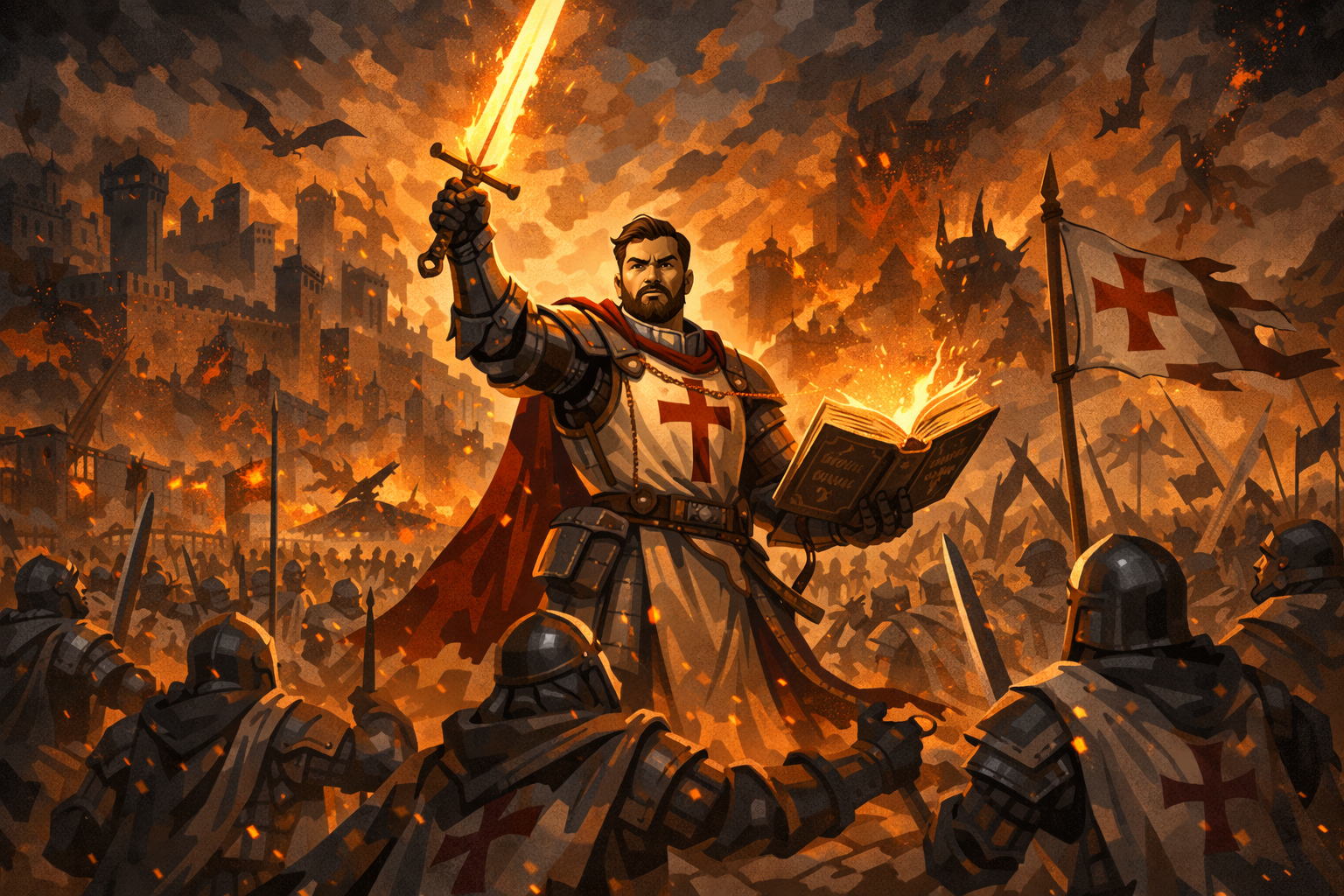
Cell-shaded portrait of an oathbound crusader knight in Legion
The Oathbearer A mailed pilgrim who has taken the cross and marches east beneath a weathered banner.
Cell-shaded scene of crusaders crossing toward Constantinople and the Bosporus in Legion
The Bosporus Crossing The host gathers beneath Byzantine walls before ferries and siege trains carry the army into Anatolia.

Chapter II

Across the Bosporus

At Constantinople, the western princes enter an uneasy alliance with the eastern empire. Oaths are sworn, supplies are bargained for, and every commander understands the same hard truth: without ships, guides, and grain, holy war dies before it reaches Syria.

Once across the Bosporus, the march becomes a test of endurance. The sun over Anatolia is merciless. Water fails. Horses fall. Scouts vanish into broken ridges where lamias nest in old Roman cisterns and ash-skinned outriders circle the columns like wolves. Victories matter, but so do baggage trains, field forges, and the discipline to keep marching after a battlefield goes quiet.

The road east is not a charge of heroes. It is attrition, prayer, engineering, and the constant labor of keeping an army alive in a land that wants it dead.

Chapter III

Antioch Beneath the Red Star

Antioch looms like a judgment. The city does not fall in a week. It starves the besiegers. It breaks horses and morale. Men eat leather. Priests preach endurance. Engineers raise towers while demons answer from the walls with green fire and chained ogres.

When the gates finally open through treachery and midnight resolve, victory lasts only a breath. The city becomes a prison. A second host descends from the interior: demon cavalry in lamellar bronze, relic-thieves carrying saint bones as trophies, and a war-beast choir that howls until men forget sleep. The crusade is saved not by comfort, but by conviction hardening into fanatic clarity.

Here the host stops behaving like a gathering of competing nobles and becomes a true Living Crusade. It learns to survive siege, counter-siege, and the terror of seeing the enemy return after the city seemed won.

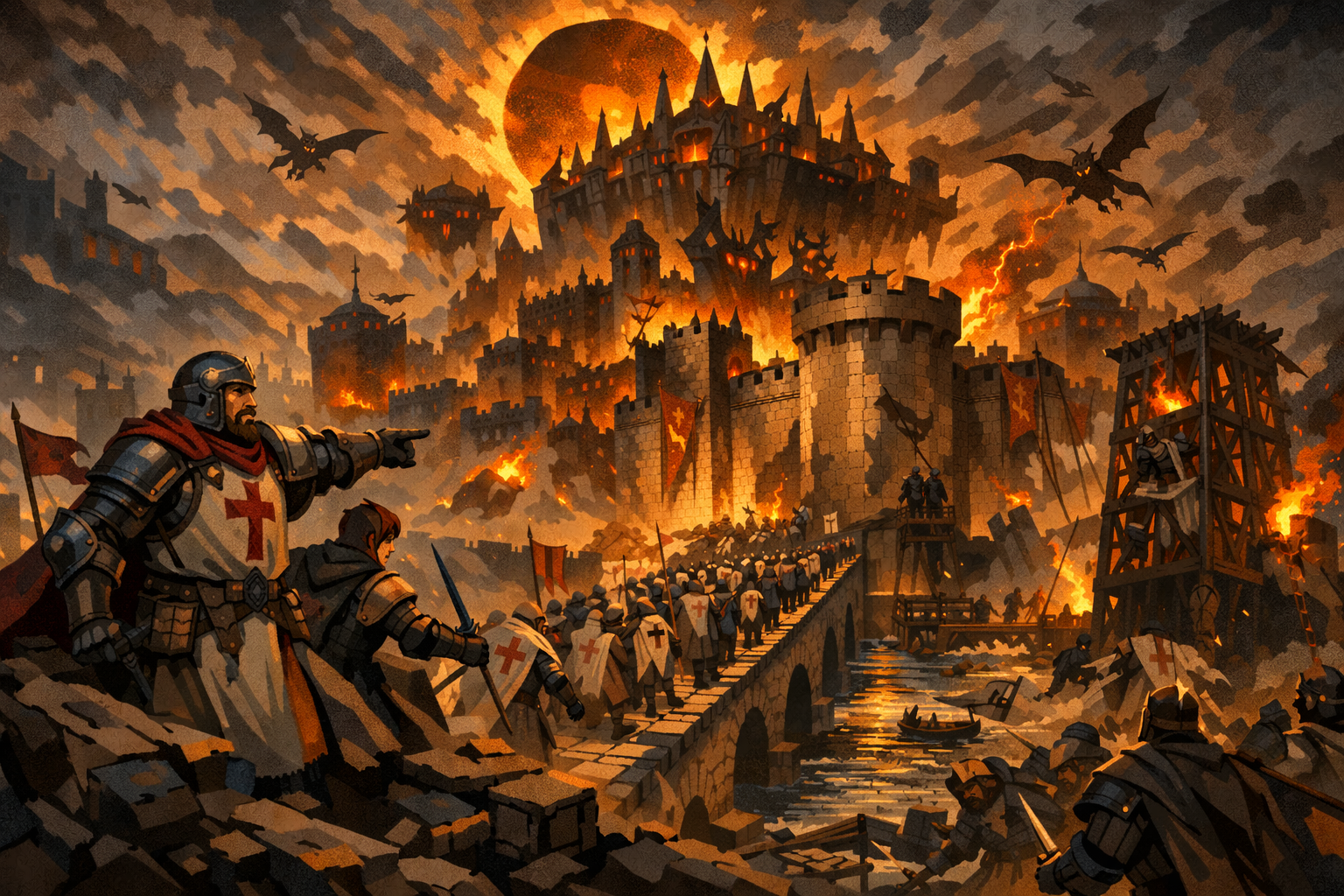
Cell-shaded scene of Antioch under siege by crusaders and monsters in Legion
The Siege of Antioch High walls, famine, betrayal, and the counter-siege that forges rival contingents into a single host.
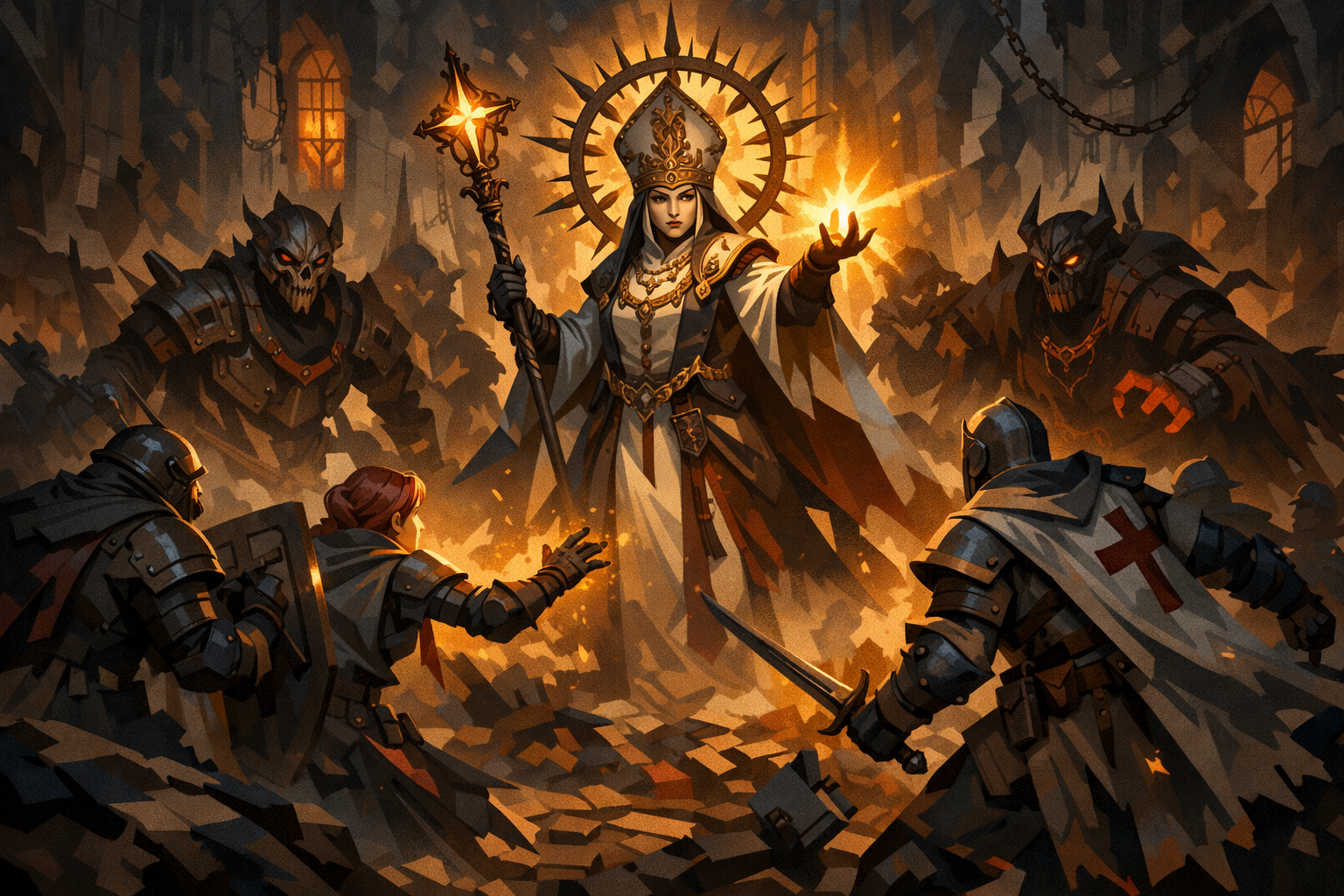
Cell-shaded portrait of a battle abbess and standard-bearer in Legion
The Vesper Abbess A chaplain-standard bearer who keeps the host together with relics, ration records, battlefield rites, and grim resolve.

Chapter IV

The March South

After Antioch, the host moves like a blade drawn at last. Coastal strongholds bargain, open their ports, or burn. Relics recovered from ruined churches are carried in procession. The sick, the poor, and the camp train still move with the host, because the crusade remains an armed pilgrimage before it becomes a conquest.

The host now fights an enemy that understands sacred geography. Wells are fouled by swamp demons. Roads to monasteries are blocked by stone colossi buried to the waist in sand. Monstrous heralds nail skins and false gospels to the outer chapels of every town that refuses them. In answer, the crusade becomes harsher, more ordered, and more convinced that only relentless advance can break the land free.

Not every oath is kept with the sword. Caravans must be secured, camps fortified, relic processions escorted, roads held, and the host brought to the final siege with enough strength to matter.

Chapter V

The Holy City Under Eclipse

The road ends before Jerusalem. The city shines behind pale walls and blackened domes, beautiful enough to be mourned and terrible enough to be feared. The final assault comes with processions, fasting, siege towers, ladders, and the conviction that the walls must be taken at any cost.

What waits on those walls is not a mortal garrison. Demon emirs hold the gates beneath eclipsed light. Serpentine jurists chant from the battlements. Things without faces prowl the Temple courts. When the host breaks through, it does not merely capture a city. It tears open the last knot of the Sundering and sees how much of the holy land has already been claimed by the abyss.

Jerusalem is not the end. The city is won, the countryside is not, and the surviving monsters flee into ruins, deserts, mountain keeps, and buried shrines that will feed the war for seasons to come.

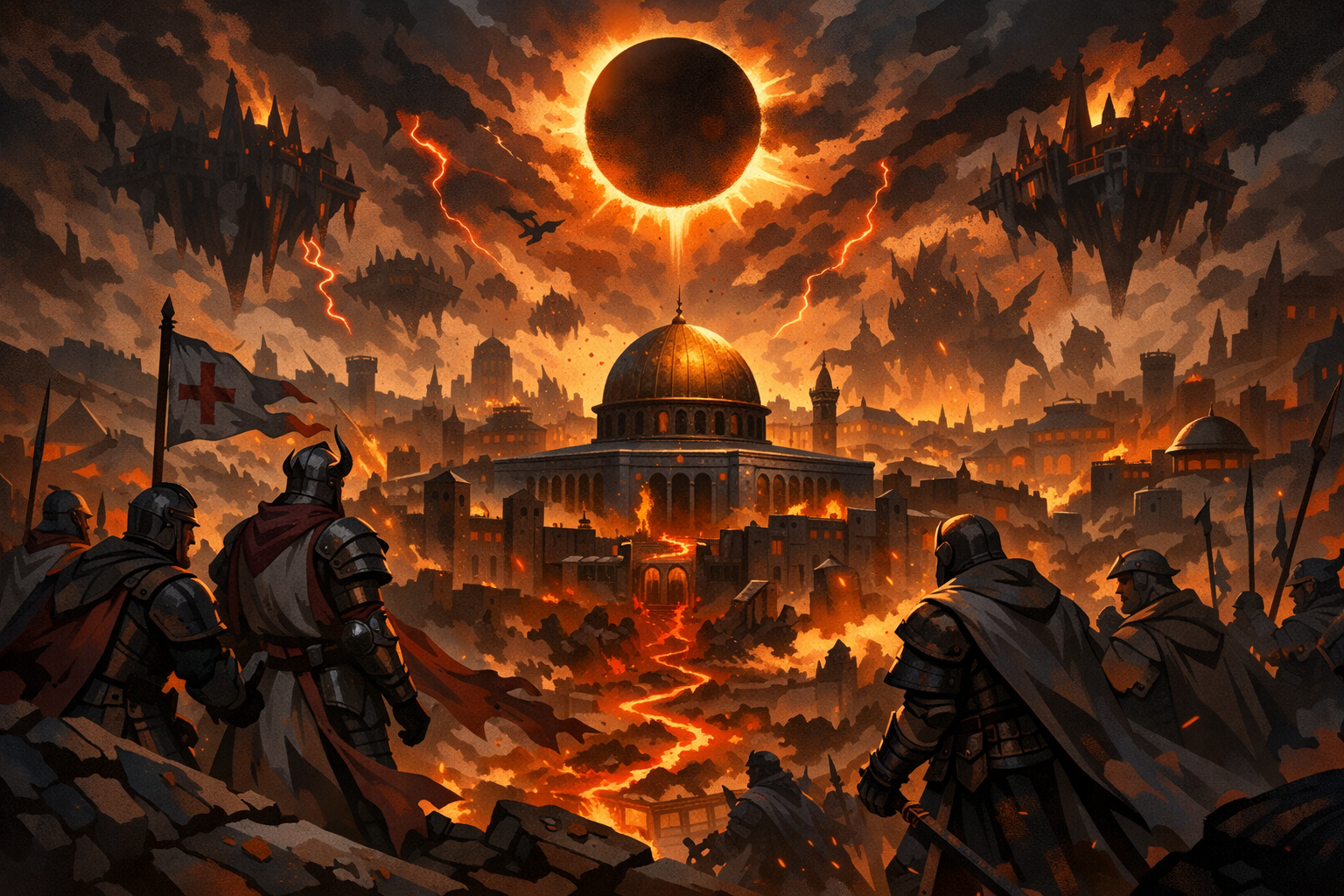
Cell-shaded scene of the Holy City under eclipse and demonic threat in Legion
The Holy City The final breach reveals how far the Sundering has spread beneath the sacred stones.

The Oath

The Oath Eternal

The burdens of the march do not end at the walls. Vows must still be honored publicly. Supply must still be gathered under threat. Rival lords still argue within the host. Relics must still be guarded, the wounded still carried, and every victory paid for in hunger, fear, and iron discipline.

You do not arrive as a chosen one dropped from nowhere. You join as an oathbound champion inside a host already on the march, with a place to earn in the line. Duelist, scout, quartermaster, engineer, healer, or standard bearer, every labor serves the same truth: banners endure only when thousands of separate acts hold together.

Swear the Oath. Take the cross. Hold the road. Break the siege. Raise your banner over the Holy City, then ride back out into the dark that still surrounds it.